
Leadership & Senior Researchers
3 members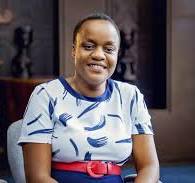
Dr. Lilian Wanzare
Founder & Lead Researcher
Dr. Vivian Oloo
Senior Researcher — NLP & Corpus Linguistics

Dr. Gabriel Oliko
Senior Researcher — Applied AI & Data Governance
Research Associates
11 members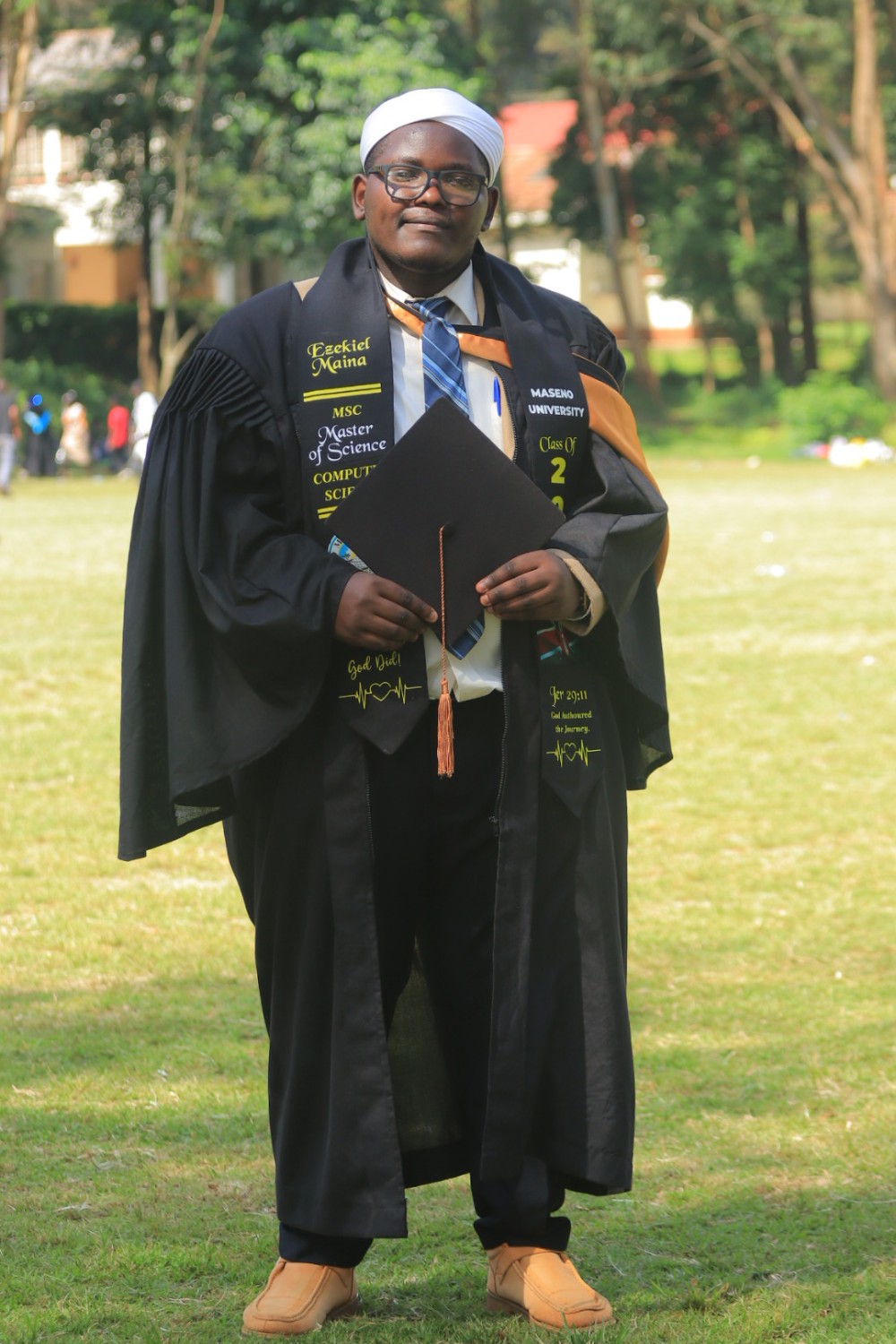
Ezekiel Maina
Computer Vision & Disability Inclusion
Ezekiel Maina leads the Computer Vision research faction at MCAAI and is the principal engineer behind the AI4KSL project — MCAAI's AI powered system for Kenyan Sign Language (KSL) glossing and avatar generation, developed in partnership with Data Science Africa (DSA).
Ezekiel designed and built the foundational model architecture that enables real-time translation of spoken English into KSL avatar animations. The system is built on a training dataset of over 20,000 annotated sign language videos, making it one of the most comprehensively resourced KSL computational systems in existence. His architecture combines pose estimation, transformer based sequence modelling, and avatar rendering pipelines to produce naturalistic signing animations that accurately capture the spatial grammar of KSL.
Prior to AI4KSL, Ezekiel contributed to the early data collection phase of the African Next Voices initiative, developing the web based voice recording platform used to gather speech data from community contributors across Western Kenya. This tool has since been used to collect thousands of hours of audio across multiple language communities.
Ezekiel's work on AI4KSL directly addresses the digital exclusion experienced by deaf and hard of hearing communities in Kenya, providing a scalable, AI driven solution to the absence of sign language interpretation in digital educational and professional environments. He is committed to ensuring that persons with disabilities are not an afterthought in Africa's AI development trajectory, but active participants and beneficiaries from the outset.
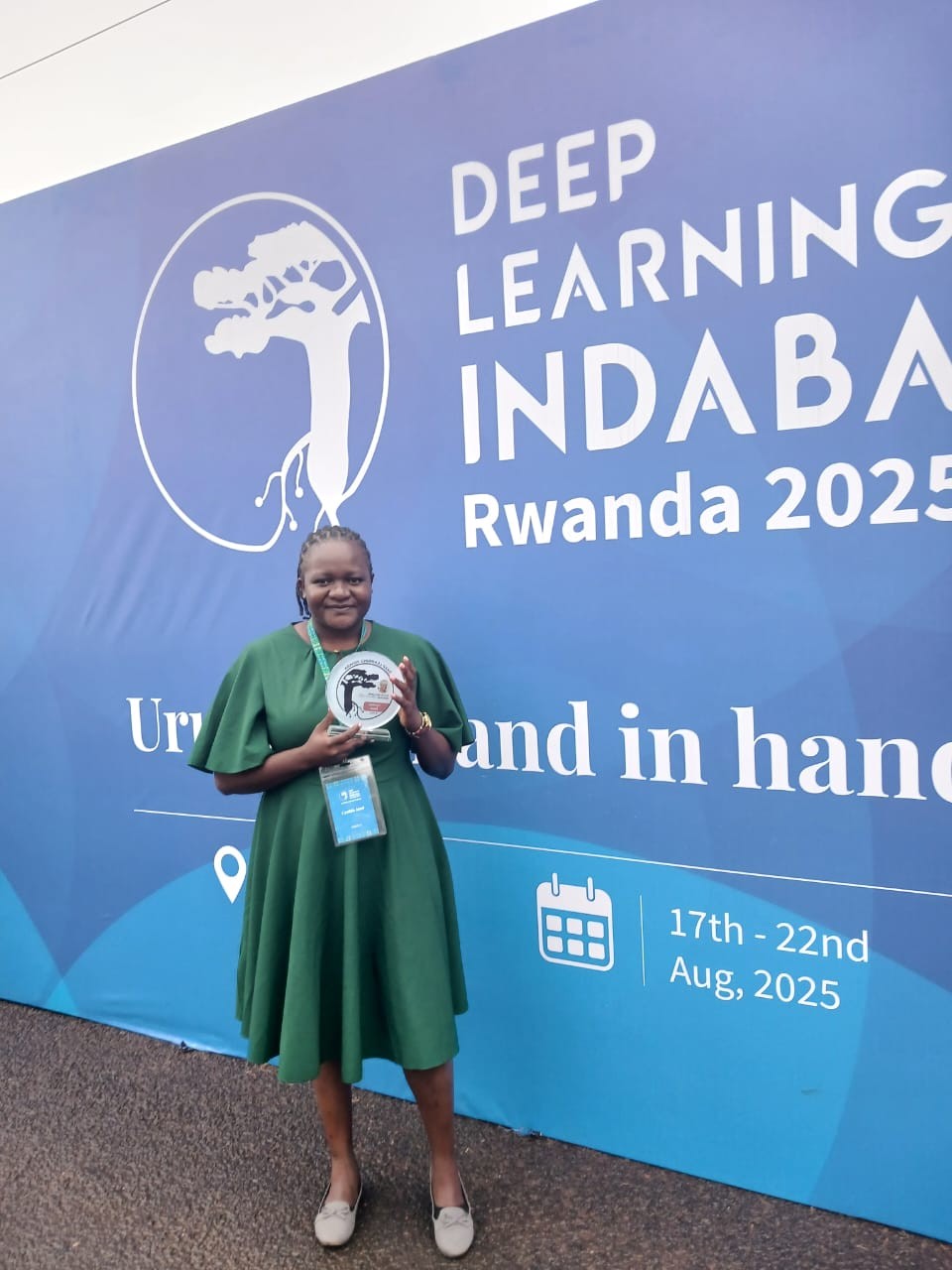
Cynthia Jayne Amol
NLP & Community Engagement
Cynthia Jayne Amol is a Research Associate at MCAAI where she guides and mentors junior researchers in NLP methodology, African language data collection, and ethical research practice. She is also the co founder of TONATIVE — a pan African initiative dedicated to building AI models capable of understanding, processing, and generating African languages, and one of the first such initiatives to adopt an explicitly community first approach to language technology on the continent.
At MCAAI Cynthia applies her expertise in computational linguistics and community engagement to ensure that all data collection efforts are culturally sensitive, linguistically accurate, and grounded in genuine community consent. She works closely with community leaders and local linguists to develop data collection protocols that respect the cultural contexts from which language data is gathered, and she trains junior researchers and student volunteers in these protocols before they engage with speaker communities in the field.
Cynthia's research contributions span corpus development for multiple Kenyan languages, NLP model evaluation methodologies designed for low resource settings, and the design of community facing interfaces that enable non technical speakers to contribute their language data with full understanding of how it will be used. Her work bridges the often wide gap between academic NLP research and the lived linguistic realities of African communities, and she is one of MCAAI's most effective advocates for the principle that language technology must be built with communities, not merely for them.
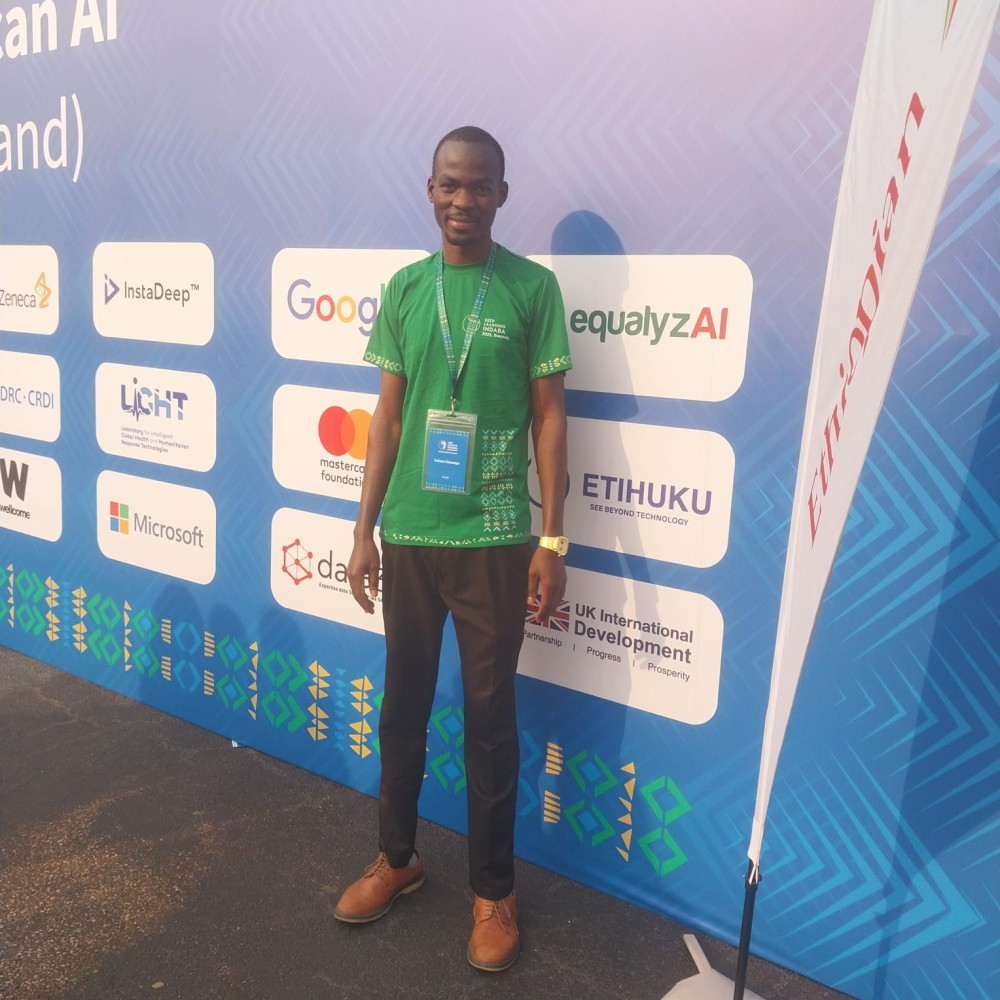
Nelson Odhiambo
Machine Translation
Nelson Odhiambo is a PhD candidate in Computer Science at Maseno University, where his doctoral research focuses on machine translation for low-resource African languages. At MCAAI he leads the Machine Translation team within the NLP research programme, directing the development of neural translation systems for Dholuo, Kikuyu, and related Nilotic and Bantu languages.
Nelson's translation research employs a range of architectures — from sequence to sequence models with attention mechanisms to modern multilingual transformer approaches such as mBART and NLLB — adapting them to the specific morphological and tonal characteristics of his target languages. His work on Dholuo English machine translation has produced the first publicly available neural translation system for the language pair, a milestone that opens up new possibilities for cross lingual information access for Dholuo speakers.
Nelson is also the pioneer of MCAAI's Hate Speech Sentiment Analysis project, a timely research initiative that applies NLP techniques to detect and classify harmful content in African language social media contexts. The project addresses a critical gap in content moderation infrastructure: mainstream AI content moderation systems are trained almost exclusively on high-resource languages and systematically fail to identify harmful content in Dholuo, Kikuyu, and other Kenyan languages. Nelson's work provides the first computational tools for addressing this gap at scale.
Through both his translation and hate speech research, Nelson exemplifies MCAAI's conviction that NLP technology must serve not only the scientific community but also the everyday safety and wellbeing of African language users online.
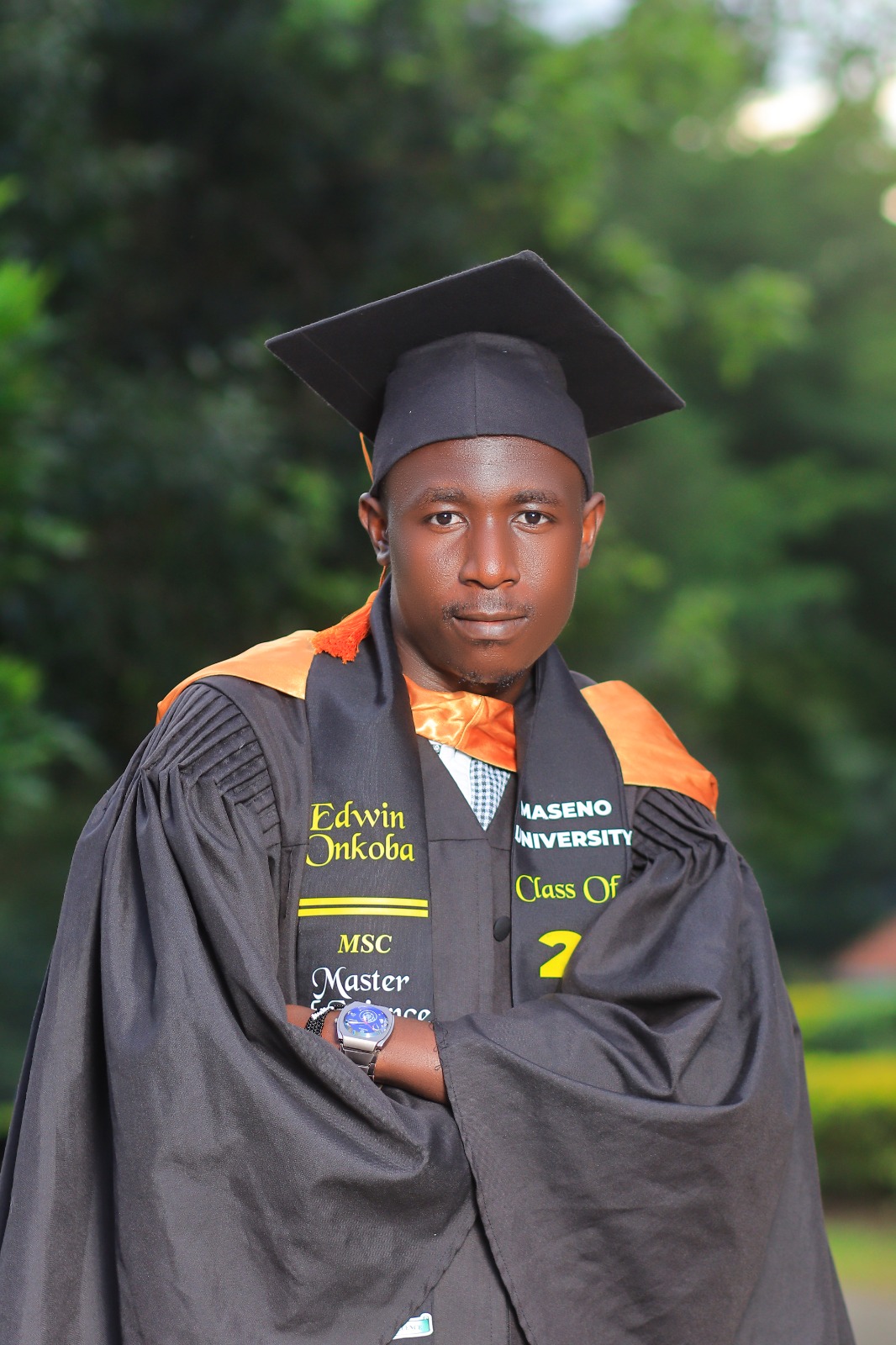
Edwin Onkoba
Synthetic Data Generation
Edwin Onkoba leads the Synthetic Data Generation team at MCAAI — a research function that directly addresses one of the most fundamental constraints in African language AI development: the chronic scarcity of labelled training data for low-resource languages.
As a PhD candidate in Computer Science at Maseno University, Edwin's doctoral research explores techniques for generating high-fidelity synthetic text and speech data that can augment real-world corpora for low-resource language modelling. His work encompasses generative adversarial networks, large language model based data synthesis, and statistical augmentation approaches, evaluated rigorously against native speaker benchmarks to ensure that synthetic data maintains authentic linguistic properties.
Edwin's contributions are foundational to MCAAI's ability to scale its language datasets beyond what community data collection alone can achieve. Community data collection — while essential for authenticity and ethical grounding — is time intensive and resource constrained. Synthetic data generation allows the centre to dramatically increase the volume of training examples available for its NLP and ASR models, accelerating model development without compromising linguistic quality.
He works closely with the corpus linguistics and NLP teams to design synthetic pipelines that complement, rather than replace, real-world data collection efforts. His benchmarking methodology — which compares synthetic data quality against held-out native speaker recordings and texts — has become a standard quality assurance protocol across MCAAI's language programmes.
Hope Kerubo
Corpus Linguistics (Ekegusii & Kuria)
Hope Kerubo is a Master's student at Maseno University and a Research Associate at MCAAI, where her work focuses on corpus creation for Ekegusii and Kuria — two Bantu languages spoken in the Kisii and Migori regions of Kenya that remain significantly under resourced in the computational linguistics landscape.
Hope's research involves the collection, annotation, and validation of text and speech data from native speaker communities, applying rigorous linguistic standards to ensure that the resulting corpora are suitable for downstream NLP tasks including language modelling, machine translation, and speech recognition. She conducts field data collection sessions with community contributors across the Kisii and South Nyanza regions, working closely with local linguists and cultural custodians to ensure that the data she collects accurately reflects the full breadth of each language's vocabulary, grammar, and usage patterns.
Her work is expanding the linguistic coverage of MCAAI's datasets and contributing to the digital preservation of two languages that face growing displacement pressure from dominant regional languages such as Kiswahili and Dholuo. By creating open, well documented corpora for Ekegusii and Kuria, Hope is helping to ensure that these languages have a presence in the AI systems of the future — and that their speakers are not left behind in the transition to AI mediated digital communication.
Hope is supervised jointly by Dr. Vivian Oloo and Dr. Lilian Wanzare, and her corpus work feeds directly into MCAAI's multilingual language model development pipeline.
Biatus Maina
Machine Learning Engineering
Biatus Maina is a Master's student at Maseno University and a Research Associate at MCAAI, contributing to the centre's machine learning engineering infrastructure. With a strong practical grounding in software engineering, model optimisation, and MLOps practices, Biatus serves as a key technical collaborator for teams across MCAAI's four research programmes.
His primary contribution is in translating research prototypes into robust, production ready systems. The gap between a research model and a deployable application is often large — involving performance optimisation, API development, data pipeline engineering, and integration testing — and Biatus plays a central role in bridging this gap across MCAAI's portfolio. He has contributed engineering support to the AI Farm Assistant, the DhoNam corpus processing pipeline, and the AI4KSL avatar backend system.
Biatus is also deeply involved in MCAAI's internal tooling development, building the data management systems, annotation interfaces, and model evaluation dashboards that enable the centre's researchers to work efficiently at scale. His contributions — while often invisible in published research outputs — are essential to MCAAI's ability to move rapidly from research idea to working prototype to deployable system.
He is supervised by Dr. Samwel Oonge and works in close collaboration with Starnley Odiwuor on the centre's MLOps and deployment infrastructure.
Starnley Odiwuor
MLOps & Model Deployment
Starnley Odiwuor is a Master's student at Maseno University and a Research Associate at MCAAI, where he leads the centre's MLOps engineering efforts — ensuring that AI models developed across MCAAI's research programmes are deployed, monitored, and maintained as stable, scalable systems that serve real users reliably in the field.
The gap between a trained model and a production deployment is one of the most challenging engineering problems in applied AI, particularly in African research environments where cloud infrastructure costs, connectivity constraints, and device heterogeneity add significant complexity. Starnley designs and maintains the CI/CD pipelines, model versioning systems, experiment tracking infrastructure, and performance monitoring dashboards that form the backbone of MCAAI's production AI environment.
His work has been instrumental in enabling MCAAI to move from research prototype to live deployment across multiple projects. The AI Farm Assistant's USSD and web deployment, the DhoNam dataset release pipeline, and the AI4KSL avatar rendering backend all depend on the infrastructure Starnley has built and continues to maintain.
Starnley is also developing expertise in edge deployment — optimising AI models for low power devices and intermittent connectivity environments, which is essential for MCAAI's mission of reaching communities in rural Western Kenya. He works in close collaboration with Biatus Maina on the centre's broader machine learning engineering infrastructure.

Boniface Mwau
Automatic Speech Recognition & TTS (Kikuyu)
Boniface Mwau is a Research Associate at the Maseno Centre for Applied Artificial Intelligence (MCAAI) and an MSc Computer Science student at Maseno University. His research focuses on Natural Language Processing (NLP), speech technologies, and data-centric AI for low-resource African languages.
His current research investigates data-efficient neural Text-to-Speech (TTS) for low-resource Kenyan languages, with a focus on Kikuyu. He is interested in multilingual transfer learning, Automatic Speech Recognition (ASR), machine translation, language resource creation, and the development of open AI technologies for African languages.
At MCAAI, he contributes to research on speech and language technologies, multilingual NLP, cultural knowledge representation, and AI datasets for African languages. His postgraduate research is supervised by Dr. Lilian Wanzare and Dr. Vivian Oloo.
Maureen Awour
Dholuo Corpus & Data Validation
Moureen Awour is a Master's student at Maseno University, a Data Science Africa (DSA) Fellow, and a Research Associate at MCAAI. Her DSA fellowship reflects her standing as an emerging leader in the African data science community, and she brings the rigorous quantitative training of that programme to her work at MCAAI.
Moureen focuses on Dholuo corpus creation and data validation, ensuring that the speech and text data produced by the DhoNam and African Next Voices initiatives meets the rigorous linguistic and technical standards required before being released for open research use. Her validation work is systematic and data driven: she applies statistical quality metrics to incoming audio batches, uses inter annotator agreement analysis to assess transcription consistency, and develops automated pre screening pipelines that flag recordings for human review based on audio quality and transcription confidence scores.
Her data science background enriches the validation methodology she has introduced to MCAAI's corpus production pipeline. Prior to Moureen's contributions, quality assurance was largely manual; she has helped to systematise and partially automate the process, significantly increasing the throughput of validated data while maintaining high quality standards.
Moureen also contributes to MCAAI's broader community of practice, sharing her data science expertise with junior researchers through informal workshops and code review sessions. She is supervised by Dr. Vivian Oloo and works in close collaboration with Judith Odera and Martin Okech on the DhoNam corpus team.
Valary Atieno
Disability Inclusion & AI4KSL
Valary Atieno is a Master's student in Computer Science at Maseno University and a Research Associate at MCAAI, where she is a core team member of the AI4KSL project — MCAAI's AI powered Kenyan Sign Language production system — and a committed advocate for disability inclusion in African AI development.
Valary contributes to the AI4KSL project across multiple dimensions: she assists with the curation and annotation of the sign language video dataset, participates in model evaluation sessions with deaf community representatives, and helps to design the user interface components of the KSL avatar system to ensure they meet the accessibility needs of deaf and hard of hearing users. Her work is informed by direct engagement with deaf schools and disability advocacy organisations in Western Kenya, whose feedback shapes the design priorities of the AI4KSL system.
Beyond AI4KSL, Valary is a vocal champion for disability inclusion as a research priority within MCAAI and Maseno University more broadly. She has presented on the topic at university seminars and student conferences, making the case that AI systems designed without consideration for disability inclusion risk compounding existing inequalities in digital access.
Valary is supervised by Dr. Samwel Oonge and works in close collaboration with Ezekiel Maina on the technical aspects of the AI4KSL system. Her research interests are increasingly focused on the design of participatory methodologies for co creating AI tools with disability communities, rather than designing for them without their direct input.
Jack Oraro
Software Engineering & Data Collection
Jack Oraro is an undergraduate student at Maseno University studying Computer Science, and a Research Associate at MCAAI where he applies his software engineering skills to build the tools that power the centre's data collection programmes.
Jack's most significant contribution to date is the development of MCAAI's web-based voice collection platform — the primary interface through which community contributors record and submit Dholuo, Kikuyu, and other language samples for the African Next Voices and DhoNam initiatives. The platform handles audio recording, quality pre screening, contributor consent management, and metadata capture in a browser-based interface accessible on any internet-connected device. It has been used to collect thousands of hours of speech data across multiple language communities.
Beyond the voice collection platform, Jack contributes to MCAAI's broader software engineering infrastructure, assisting with the development and maintenance of internal tooling including data annotation interfaces, dataset management systems, and the web front-end components of the AI Farm Assistant platform.
Jack is mentored by Ezekiel Maina and Starnley Odiwuor, and is developing expertise in full stack web development, progressive web app architecture, and the engineering of human in the loop data collection systems. His work exemplifies MCAAI's commitment to involving undergraduate students in meaningful research engineering from the earliest stages of their academic careers.
Join the Centre
Work With Us
MCAAI welcomes postgraduate students, visiting researchers, and industry collaborators. If you are passionate about AI for African communities, we want to hear from you.