Harnessing AI for Community-Driven
Maseno Center for Applied Artificial Intelligence (MCAAI) drives innovation in AI research, education, and real-world solutions for health, agriculture, education, climate, and governance.
Our Three Pillars
The foundation of MCAAI's mission to bridge the gap between advanced technology and African community needs.
Research
Pioneering applied AI solutions tailored for regional dialects and diverse environmental contexts in East Africa.
- NLP for Local Languages
- AI in Agriculture
- AI for Disability (AI4D)
Capacity Building
Empowering the next generation of African data scientists and AI researchers with hands-on training and mentorship.
- Specialized Workshops
- Degree Integration
- Industry Internships
Engagement
Ensuring AI development is inclusive through grassroots community participation and ethical framework design.
- Community Data Collection
- Policy Advocacy
- Global Collaborations
Research Focus Areas — Advancing the Frontiers of Applied AI
At MCAAI, we bridge academia, industry, and community needs to solve real-world challenges. Our innovations span healthcare, agriculture, education, and disability inclusion. Explore the work driving technological leadership and real change across Africa.
AI4KSL
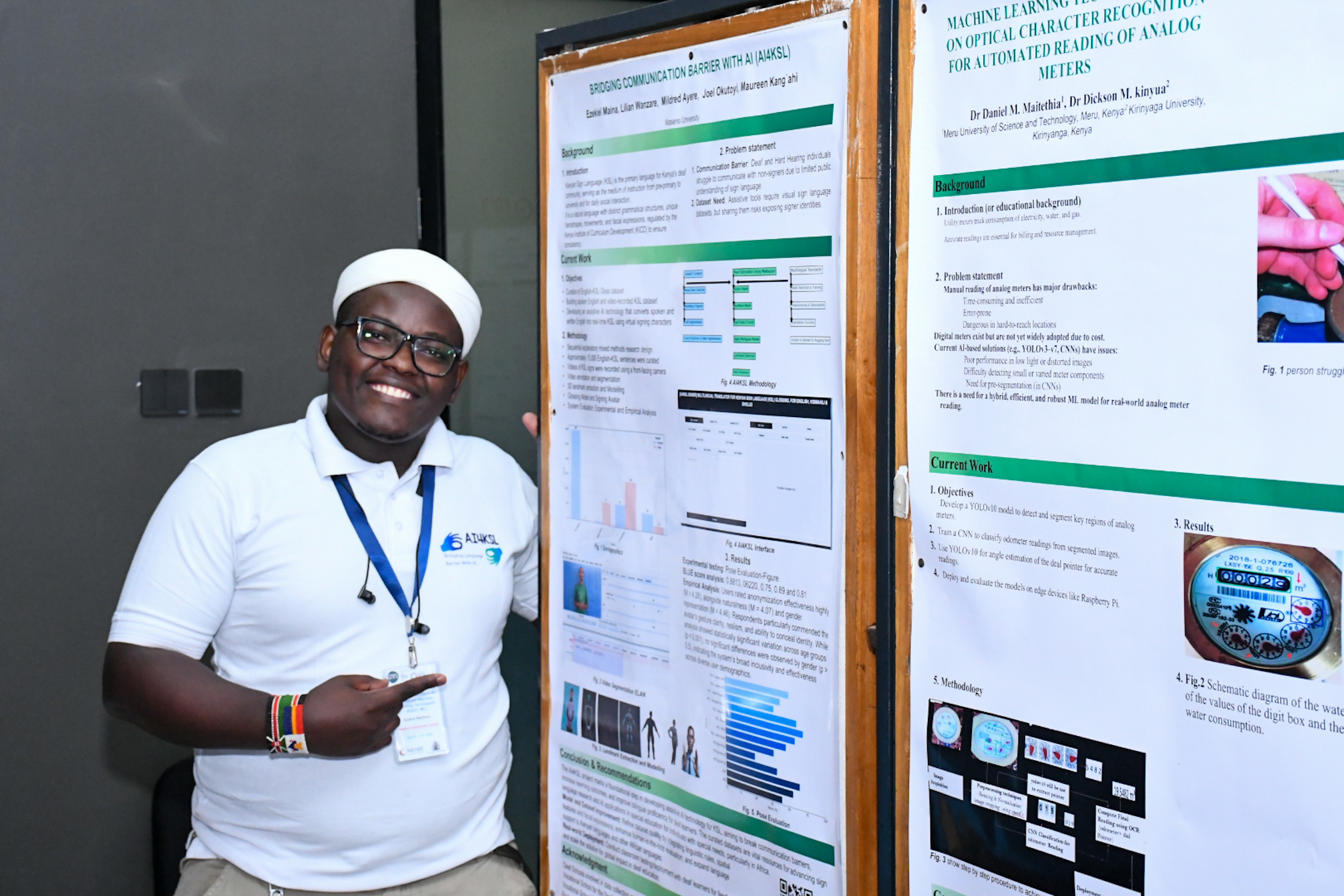
Our AI4KSL initiative builds an AI-powered avatar system translating spoken English into Kenyan Sign Language using twenty thousand videos to enhance inclusive education and workplace accessibility.
Latest News & Events
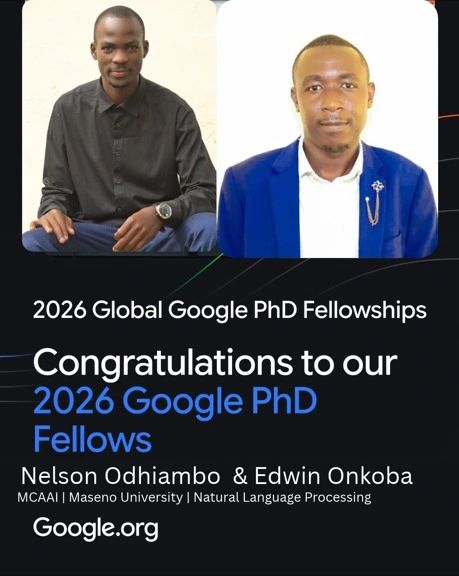
Nelson Odhiambo Onyango and Edwin Onkoba Selected as 2026 Google PhD Fellows in Natural Language Processing
MCAAI Lab congratulates Nelson Odhiambo Onyango (BSC, MSC) and Edwin Onkoba on their selection as 2026 Google PhD Fellows in Natural Language Processing! The fellowships, supported by Google.org, will support their doctoral research at Maseno University, advancing innovative approaches to language technologies for low-resource African languages. Nelson’s research focuses on a Similarity-Guided Fusion Model for cross-lingual Neural Machine Translation, particularly for Dholuo and Kalenjin. His work explores how multilingual AI models can effectively transfer linguistic knowledge across related languages while addressing negative transfer. Edwin’s research focuses on a Retrieval-Grounded Strategy for synthetic text generation using Large Language Models, particularly for Dholuo, Kalenjin and Maasai. His work leverages retrieval-based linguistic resources to improve synthetic text generation for underrepresented languages. Nelson and Edwin join 148 Google PhD Fellows from 38 countries, selected across 11 research areas and supported through $13 million in funding from Google.org. We congratulate Nelson and Edwin, their supervisors, Dr. Lilian D. A. Wanzare, PhD., Dr. James Obuhuma, PhD and Dr. Calvins Otieno, and the entire MCAAI Lab community on this achievement. We look forward to the contributions of their research towards advancing inclusive AI and African language technologies. Congratulations, Nelson and Edwin!
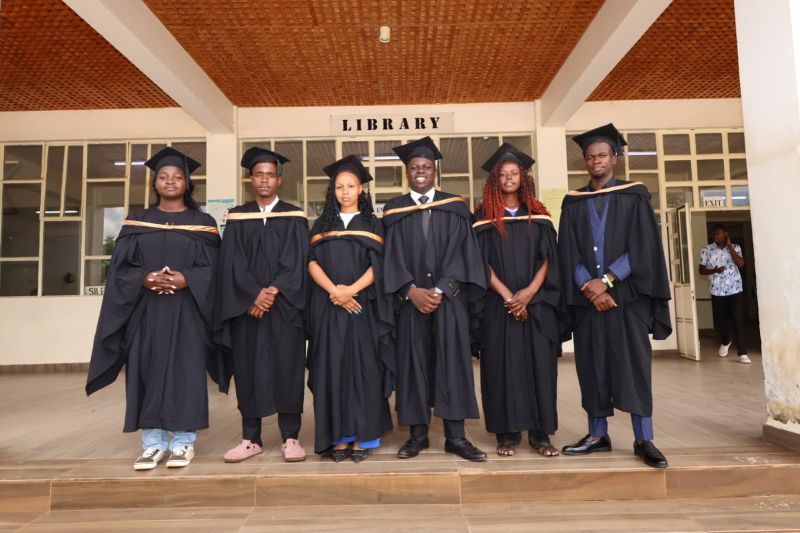
Congratulations to Our Graduates and a Warm Welcome to Our New MSc Researchers
On 13 November 2026, two members of the Maseno Centre for Applied Artificial Intelligence (MCAAI) community graduated from Maseno University. We are proud of both of them. Nelson Odhiambo graduated with a Master's degree in Computer Science, and Jack Oraro graduated with a Bachelor's degree with First Class Honours. Their work, commitment and contributions to the lab have been a real strength for our research community. Congratulations to you both. Welcoming Our New Lab Members MCAAI also welcomes six students who are starting the Master of Science in Computer Science at Maseno University. They have each secured a scholarship to pursue their studies with us. They join a research community that builds AI with and for the communities it serves. Over the course of their studies they will collect and curate data, train and evaluate models and share their work through papers, open datasets and conferences. Welcome Faith N. Njuguna, Leonard Jombo, Amina Michael, Mitchell Adhiambo, Benaih Galavu and Vitalis Amakalu. We are glad to have you with us. Harnessing AI for Community Driven Innovation.
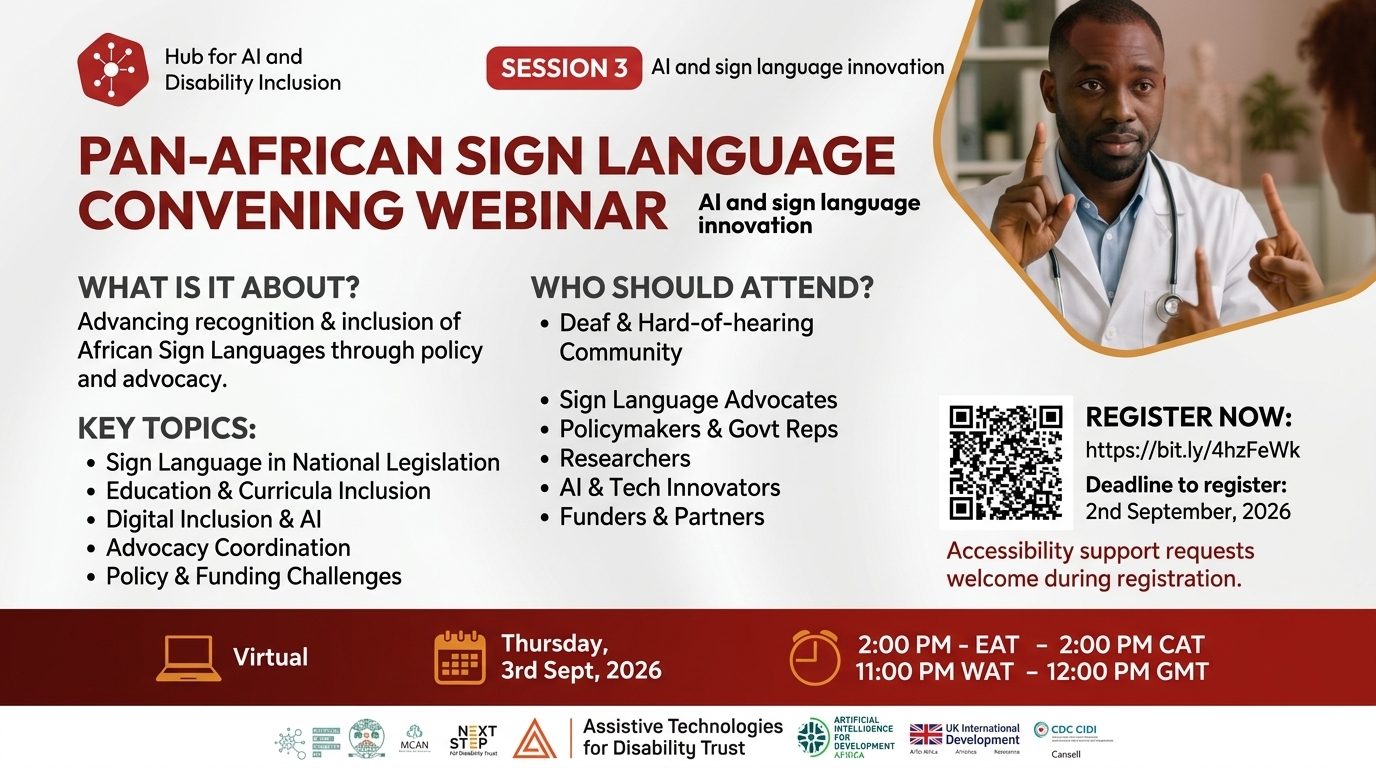
Pan‑African Sign Language Policy & Advocacy — Session 3 (Webinar)
Policy and advocacy are essential to ensuring that African Sign Languages are recognized, protected, and meaningfully included in education, digital technologies, and national development frameworks. Join Session 3 of the Pan-African Sign Language Convening Webinar as Deaf and hard-of-hearing communities, advocates, policymakers, researchers, educators, innovators, OPDs, funders, and development partners come together to discuss how stronger policies and coordinated advocacy can advance the inclusion of African Sign Languages across the continent. Session focus Recognition of African Sign Languages in national legislation and disability frameworks Inclusion in education and digital technologies Role of advocates and institutions, and policy/funding/implementation challenges Date: Thursday, 3 September 2026 Time: 2:00 PM – 3:00 PM EAT | 1:00 PM – 2:00 PM CAT | 12:00 PM – 1:00 PM WAT | 11:00 AM – 12:00 PM GMT Format: Virtual Register by 2 September 2026: https://bit.ly/4yadUTA Participants requiring accessibility support are encouraged to indicate their needs during registration. Organisers / partners: Maseno Centre for Applied Artificial Intelligence (MCAAI), Assistive Technologies for Disability Trust, Next Step Foundation, Responsible AI Lab (RAIL), Lilian D. A. Wanzare, PhD; Dr. Emmy Chirchir (PhD) MBS; Artificial Intelligence for Development (AI4D). Together, we can strengthen advocacy, influence policy, and help build a more inclusive future where African Sign Languages are recognized, represented, and supported across education, technology, and society.
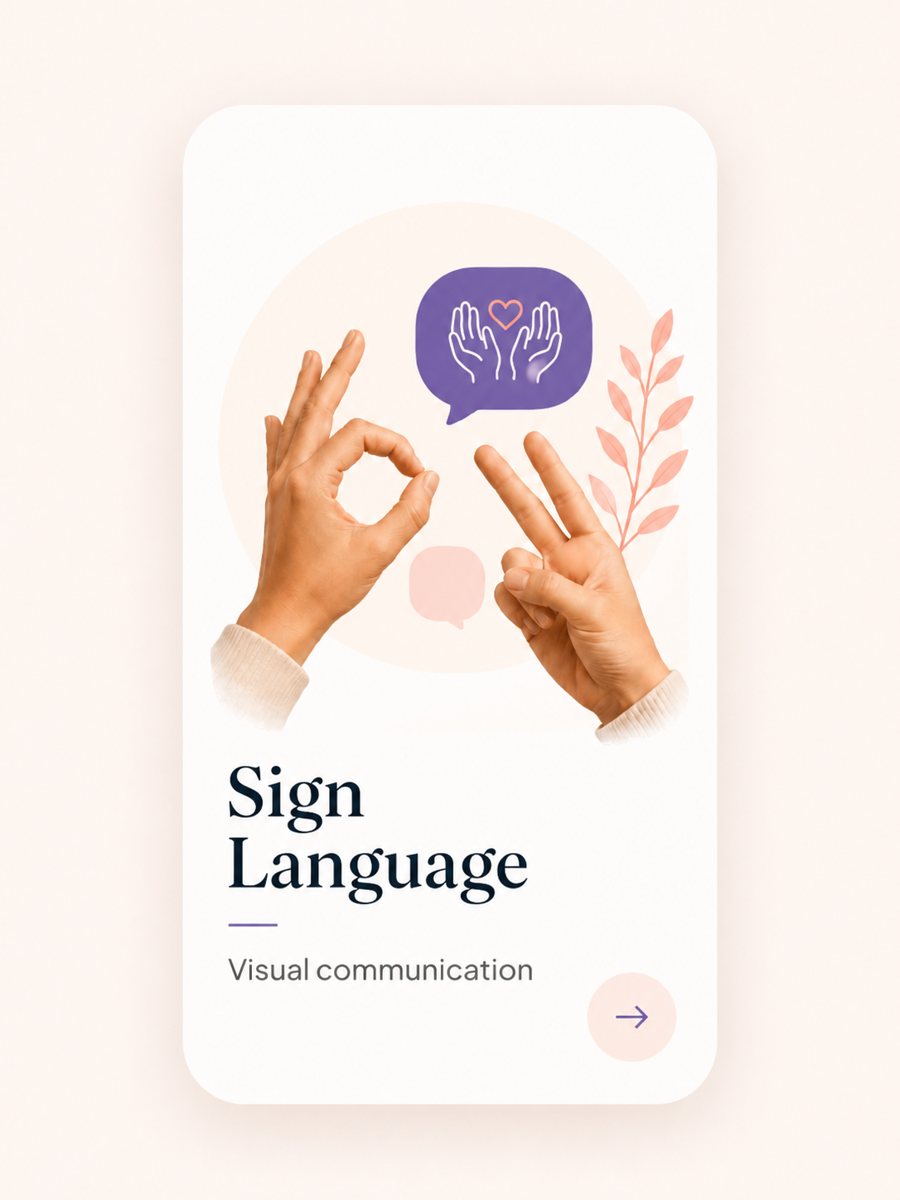
KSL Innovators Workshop: Lessons in Sign Language Data Collection
A few things stood out from the KSL Innovators Workshop that are worth sharing. Data collection is not one thing. Video and motion capture each come with real trade-offs, and the right choice depends on the task the data is meant to serve, not the other way round. For hardware-based capture, the technical team handles the angle and translation work, while interpreters handle the language side. Who you bring in, and in what order, matters. The first expert on any KSL data project should be a pool of sign language linguists — people who grew up with the language and know it as native signers. Interpreters come in handy during the review stage. Annotation is never finished on day one. Guidelines grow through use: draft conventions, test them on real samples, resolve edge cases, then revise as new cases come up. Review works best in rounds. A coordinator runs the first round. Individuals review alone first, so one person's reading does not sway the room. Then the team reviews together, reaches consensus on whether the data is correct, and agrees a common way forward wherever signing varies. Engage the Deaf community from the very beginning, not just at the evaluation stage. Trained early into the process, they catch issues as data is collected, not after — that back-and-forth is expensive, and catching problems early is what keeps errors minimal at the end. None of this is unique to KSL, but seeing it worked through in the room, with the people who will use this data, made the lessons concrete rather than theoretical. Thank you to everyone who brought their experience into that discussion.
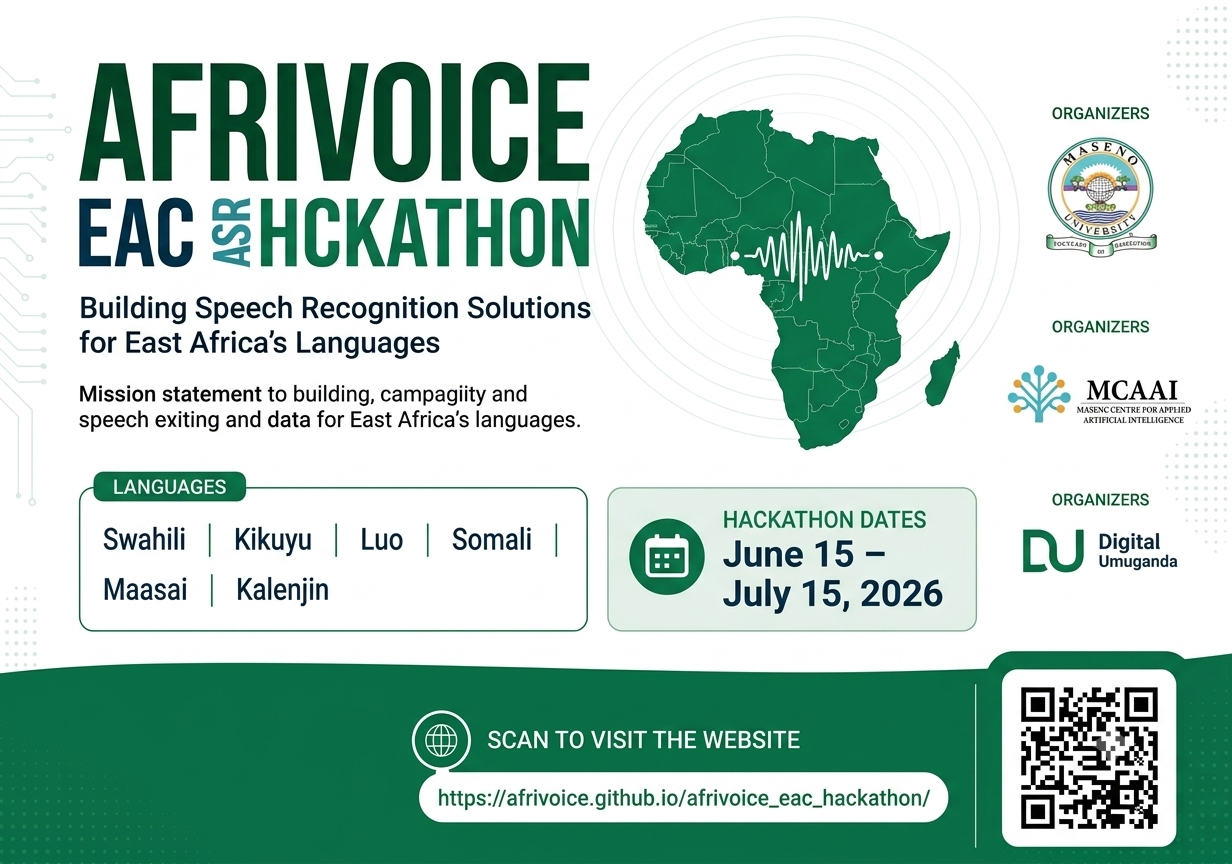
Afrivoice EAC Automated Speech Recognition Hackathon
MCAAI is proud to co-host the Afrivoice EAC Automated Speech Recognition Hackathon — a regional competition bringing together AI researchers, speech technologists, and language community representatives from across the East African Community to advance the state of ASR for the region's most under-resourced languages. About the Hackathon The Afrivoice EAC ASR Hackathon is a focused, results-driven competition designed to push the boundaries of automatic speech recognition for low-resource East African languages. Participants will be challenged to build, fine-tune, and evaluate ASR models on curated speech datasets drawn from MCAAI's own corpora — including the DhoNam Dholuo corpus and the African Next Voices multilingual dataset — as well as newly released data from partner institutions across Kenya, Uganda, Tanzania, Rwanda, and Burundi. Unlike a traditional conference, the hackathon is structured around hands-on model building. Teams will have access to compute resources, baseline model checkpoints, and dedicated mentorship from MCAAI's NLP and speech engineering team throughout the competition period. The goal is not only to produce winning models, but to generate open-source tools and fine-tuned checkpoints that the broader East African AI community can build on after the event. Target Languages The hackathon focuses on ASR development for languages that are chronically under-served by mainstream speech technology platforms. The competition dataset covers the following language tracks: Dholuo — Nilotic language, Western Kenya (4M+ speakers) Kikuyu — Bantu language, Central Kenya (8M+ speakers) Luganda — Bantu language, Uganda (6M+ speakers) Kinyarwanda — Bantu language, Rwanda (12M+ speakers) Kirundi — Bantu language, Burundi (9M+ speakers) Open Track — Any additional EAC indigenous language with submitted data Teams may compete in one or more language tracks. Cross-lingual and multilingual model submissions are explicitly encouraged and will be evaluated in a dedicated multilingual category. Competition Structure The hackathon runs over 72 hours of active model development, preceded by a half-day orientation session covering the dataset formats, evaluation metrics, and baseline model infrastructure. The competition is structured in two phases: Phase 1 — Public Leaderboard (Days 1–2): Teams submit models evaluated against a public development set. Word Error Rate (WER) scores are updated on a live leaderboard accessible to all participants. Phase 2 — Final Evaluation (Day 3): Teams make a final submission evaluated against a held-out test set. Final rankings are determined by WER on the hidden test data, with secondary scoring for model size efficiency and open-source code quality. Prizes & Recognition 1st Place (per language track): KES 150,000 + invitation to present at IndabaX Kenya 2026 2nd Place (per language track): KES 75,000 3rd Place (per language track): KES 40,000 Best Multilingual Model: KES 200,000 + MCAAI Research Collaboration Award Best Open-Source Contribution: Special recognition award + feature in MCAAI's annual research report All submitted models that meet a minimum quality threshold will be considered for integration into MCAAI's open model repository, with full attribution to the contributing team. Who Should Participate The hackathon is open to individuals and teams of up to four members. We welcome participants from all backgrounds — university students, independent researchers, professional engineers, and community linguists. No prior experience with speech recognition is required; orientation materials and baseline code will be provided to help new participants get up to speed quickly. Teams with a mix of technical and linguistic expertise are strongly encouraged, as domain knowledge of target languages is a genuine competitive advantage. Key Dates Registration Opens: 1 July 2026 Registration Deadline: 10 August 2026 Dataset Release: 15 August 2026 Hackathon Dates: 5–7 September 2026, Maseno University Winners Announced: 7 September 2026 (closing ceremony) To register your team or find out more, visit the MCAAI events page or contact the hackathon organising team at afrivoice@mcaai.ac.ke.
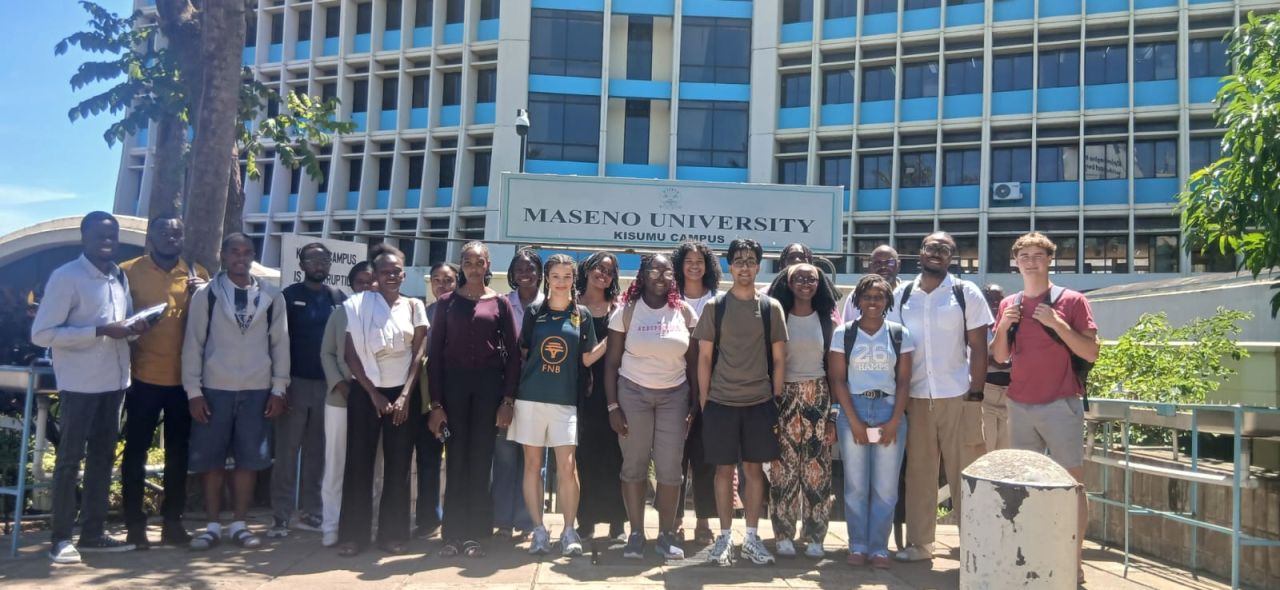
MCAAI to Host PIIRS Global Seminar – Summer 2026: Technology for African Languages in the Digital Age
MCAAI is proud to announce that Maseno University will host the PIIRS Global Seminar – Summer 2026, themed "Technology for African Languages in the Digital Age: An Interdisciplinary Approach." The six-week experiential learning programme brings together students and faculty from Princeton University and Maseno University for a deep, hands-on exploration of language technology, cultural preservation, and digital inclusion across the African continent. The Questions Driving the Programme How do we teach computers to understand African languages? What role can language technologies play in preserving culture, improving education, and advancing digital inclusion across the continent? These are not abstract questions — they are the organising challenges that will guide every week of this seminar, from classroom discussions and research workshops to community field visits and live data collection sessions. The programme is built on the conviction that answering these questions requires more than technical expertise alone. Linguists, educators, computer scientists, and community knowledge holders all bring indispensable perspectives to the challenge of building AI systems that genuinely serve African language communities — and the PIIRS seminar is designed to bring precisely those perspectives into productive dialogue. Faculty & Partners The seminar is a collaboration between Princeton University and Maseno University, drawing faculty from Computer Science, Kiswahili, and Early Childhood Education. The Princeton delegation includes Happy Buzaaba, Srinivas Bangalore, and Mahiri, who bring expertise in computational linguistics, speech and language processing, and language education respectively. The Maseno University team is led by faculty members Benard Odoyo Okal and Dr. Lilian D. A. Wanzare, Founder and Lead Researcher of MCAAI, alongside a multidisciplinary research team drawn from the centre's NLP, corpus linguistics, and applied AI programmes. Languages Featured This year's seminar focuses on six Kenyan languages that are significantly under-resourced in the computational linguistics landscape, each representing a distinct linguistic family and cultural heritage: Ekegusii — Bantu language of the Kisii highlands, South Western Kenya Teso — Nilotic language spoken in Western Kenya and Eastern Uganda Kamba — Bantu language of the Ukambani region, Eastern Kenya Dawida (Taita) — Bantu language of the Taita Hills, Coast Province Maasai — Nilotic language spoken across the Rift Valley and Northern Tanzania Turkana — Nilotic language of Turkana County, Northwestern Kenya For each language, participants will engage directly with speaker communities to collect culturally relevant data, developing firsthand understanding of the linguistic structures, social contexts, and community priorities that must inform the design of any technology intended to serve these languages. Programme Structure The seminar combines four complementary modes of learning across its six weeks: Classroom Learning: Lectures and seminars covering the foundations of NLP for low-resource languages, speech technology, corpus linguistics, and the ethics of AI-driven language preservation. Community Engagement: Structured visits to speaker communities for language data collection, conducted using MCAAI's established ethical data collection protocols and in compliance with the NOODL open data governance framework. Interdisciplinary Research: Collaborative research projects in which Princeton and Maseno students work in mixed teams to analyse collected data, build prototype language tools, and produce research outputs. Field Excursions: Cultural and linguistic field trips to Mombasa, Malindi, Maasai Mara, and Nairobi, exploring the rich linguistic diversity of Kenya and engaging with language communities in their home environments. Expected Outcomes By the close of the seminar, participants will have contributed directly to the development of new language datasets for six under-resourced Kenyan languages — data that will be deposited in MCAAI's open corpus repository under the NOODL license and made available to the global research community. Beyond the datasets themselves, the seminar aims to produce lasting research collaborations between Princeton and Maseno, a cohort of students with genuine interdisciplinary expertise in language technology, and a set of community-grounded insights that will inform MCAAI's research agenda for years to come. "We are deeply honoured to host this seminar at Maseno," said Dr. Lilian Wanzare. "The partnership with Princeton brings extraordinary expertise and energy to questions that MCAAI has been working on since our founding — and the languages we will be working with this summer are precisely the ones that need this kind of sustained, respectful, community-grounded attention. We are looking forward to an extraordinary six weeks." For more information about the PIIRS Global Seminar and opportunities to engage with the programme, visit the MCAAI events page or contact piirs@mcaai.ac.ke.
Browse Our Publications
Access peer-reviewed papers, datasets, and technical reports from our research teams. All MCAAI publications are available open-access to support the global research community.
- Peer-reviewed journal articles & conference papers
- Open datasets for African language NLP
- Technical reports & policy briefs
28+
Publications
6
Open Datasets
400+
Citations

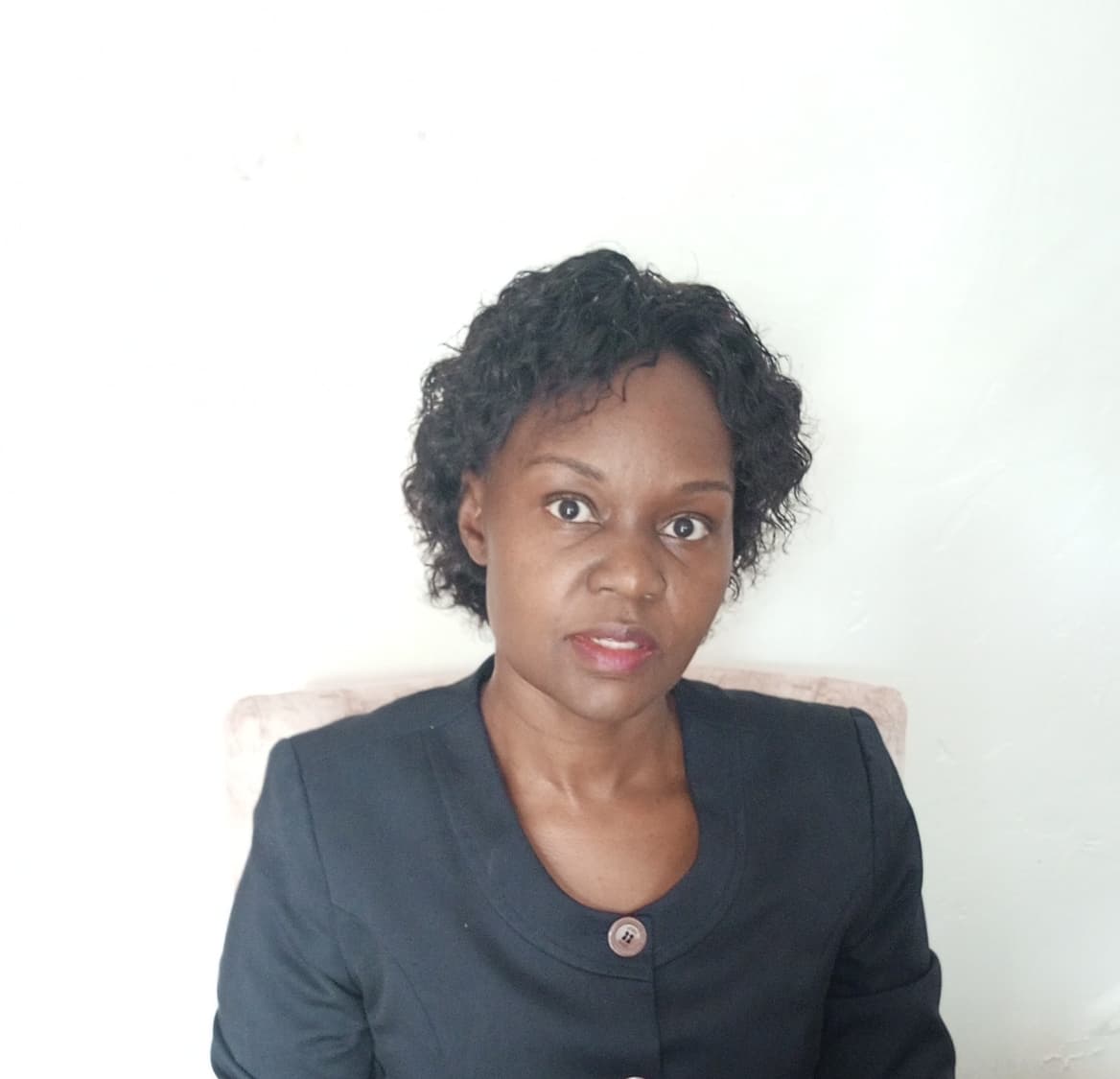

Partner with Us
Join MCAAI in bridging the gap between academic AI research and real-world impact. We collaborate with industry leaders to develop locally relevant, globally competitive solutions.
Strategic Alliances
Long-term research and development partnerships.
Innovation Hub
Incubating AI-driven startups and local ventures.
Capacity Building
Co-developing training programmes for African talent.
Submit a Partnership Inquiry
Share your organisation’s goals, and our team will reach out with collaboration options.