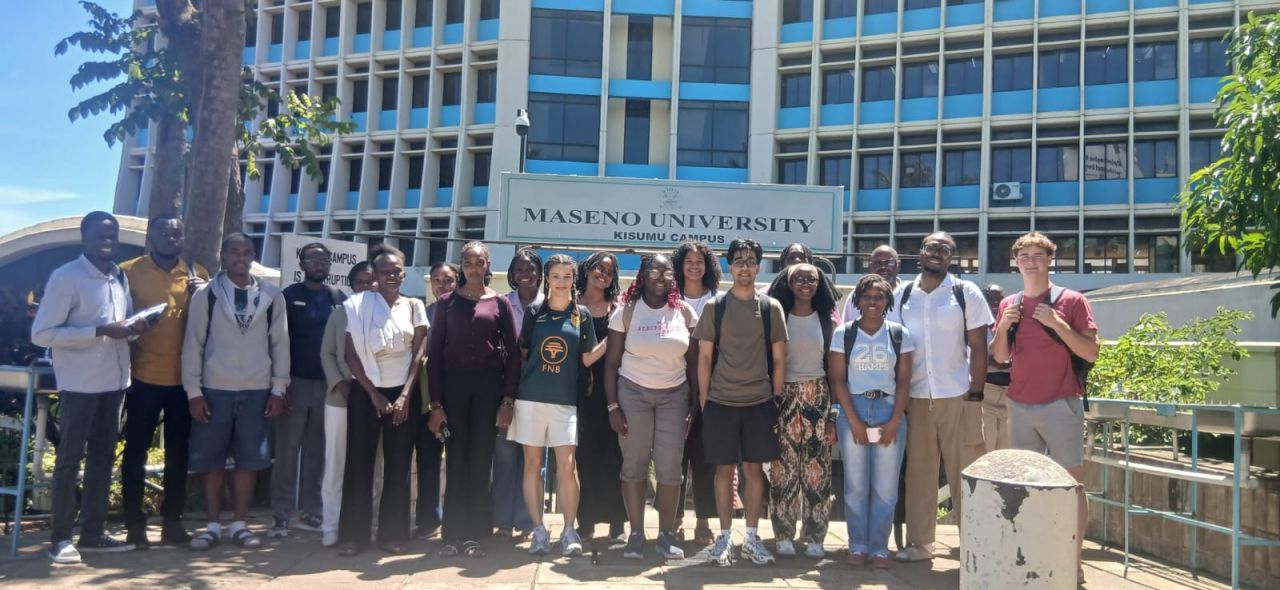
MCAAI is proud to announce that Maseno University will host the PIIRS Global Seminar – Summer 2026, themed "Technology for African Languages in the Digital Age: An Interdisciplinary Approach." The six-week experiential learning programme brings together students and faculty from Princeton University and Maseno University for a deep, hands-on exploration of language technology, cultural preservation, and digital inclusion across the African continent.
The Questions Driving the Programme
How do we teach computers to understand African languages? What role can language technologies play in preserving culture, improving education, and advancing digital inclusion across the continent? These are not abstract questions — they are the organising challenges that will guide every week of this seminar, from classroom discussions and research workshops to community field visits and live data collection sessions.
The programme is built on the conviction that answering these questions requires more than technical expertise alone. Linguists, educators, computer scientists, and community knowledge holders all bring indispensable perspectives to the challenge of building AI systems that genuinely serve African language communities — and the PIIRS seminar is designed to bring precisely those perspectives into productive dialogue.
Faculty & Partners
The seminar is a collaboration between Princeton University and Maseno University, drawing faculty from Computer Science, Kiswahili, and Early Childhood Education. The Princeton delegation includes Happy Buzaaba, Srinivas Bangalore, and Mahiri, who bring expertise in computational linguistics, speech and language processing, and language education respectively. The Maseno University team is led by faculty members Benard Odoyo Okal and Dr. Lilian D. A. Wanzare, Founder and Lead Researcher of MCAAI, alongside a multidisciplinary research team drawn from the centre's NLP, corpus linguistics, and applied AI programmes.
Languages Featured
This year's seminar focuses on six Kenyan languages that are significantly under-resourced in the computational linguistics landscape, each representing a distinct linguistic family and cultural heritage:
- Ekegusii — Bantu language of the Kisii highlands, South Western Kenya
- Teso — Nilotic language spoken in Western Kenya and Eastern Uganda
- Kamba — Bantu language of the Ukambani region, Eastern Kenya
- Dawida (Taita) — Bantu language of the Taita Hills, Coast Province
- Maasai — Nilotic language spoken across the Rift Valley and Northern Tanzania
- Turkana — Nilotic language of Turkana County, Northwestern Kenya
For each language, participants will engage directly with speaker communities to collect culturally relevant data, developing firsthand understanding of the linguistic structures, social contexts, and community priorities that must inform the design of any technology intended to serve these languages.
Programme Structure
The seminar combines four complementary modes of learning across its six weeks:
- Classroom Learning: Lectures and seminars covering the foundations of NLP for low-resource languages, speech technology, corpus linguistics, and the ethics of AI-driven language preservation.
- Community Engagement: Structured visits to speaker communities for language data collection, conducted using MCAAI's established ethical data collection protocols and in compliance with the NOODL open data governance framework.
- Interdisciplinary Research: Collaborative research projects in which Princeton and Maseno students work in mixed teams to analyse collected data, build prototype language tools, and produce research outputs.
- Field Excursions: Cultural and linguistic field trips to Mombasa, Malindi, Maasai Mara, and Nairobi, exploring the rich linguistic diversity of Kenya and engaging with language communities in their home environments.
Expected Outcomes
By the close of the seminar, participants will have contributed directly to the development of new language datasets for six under-resourced Kenyan languages — data that will be deposited in MCAAI's open corpus repository under the NOODL license and made available to the global research community. Beyond the datasets themselves, the seminar aims to produce lasting research collaborations between Princeton and Maseno, a cohort of students with genuine interdisciplinary expertise in language technology, and a set of community-grounded insights that will inform MCAAI's research agenda for years to come.
"We are deeply honoured to host this seminar at Maseno," said Dr. Lilian Wanzare. "The partnership with Princeton brings extraordinary expertise and energy to questions that MCAAI has been working on since our founding — and the languages we will be working with this summer are precisely the ones that need this kind of sustained, respectful, community-grounded attention. We are looking forward to an extraordinary six weeks."
For more information about the PIIRS Global Seminar and opportunities to engage with the programme, visit the MCAAI events page or contact piirs@mcaai.ac.ke.