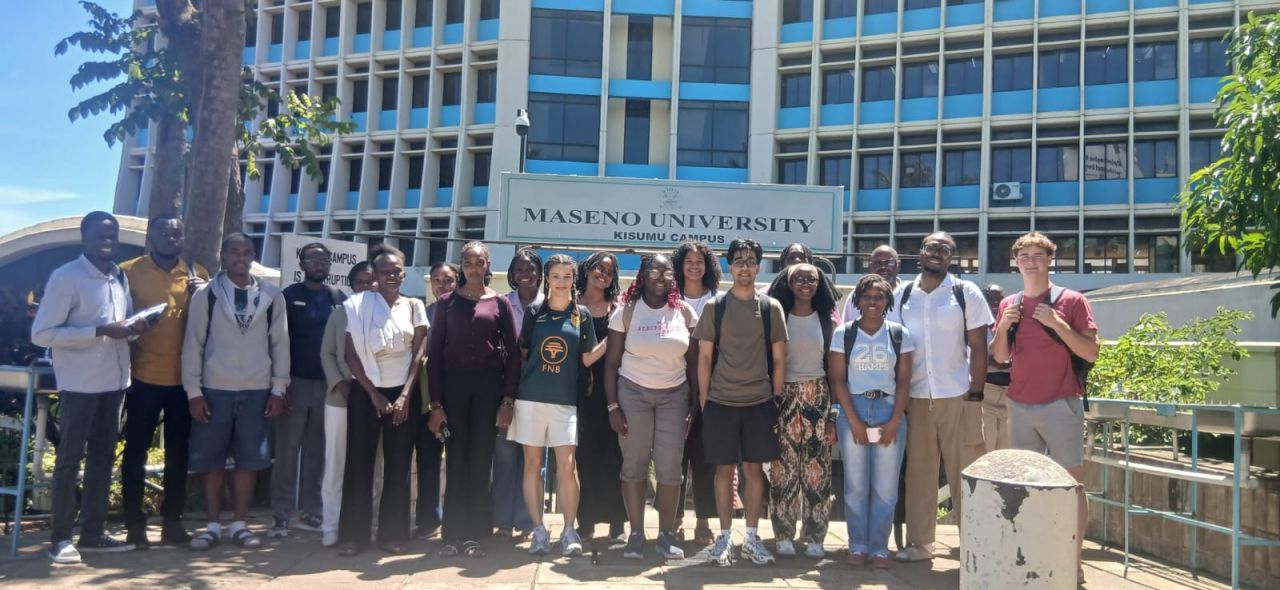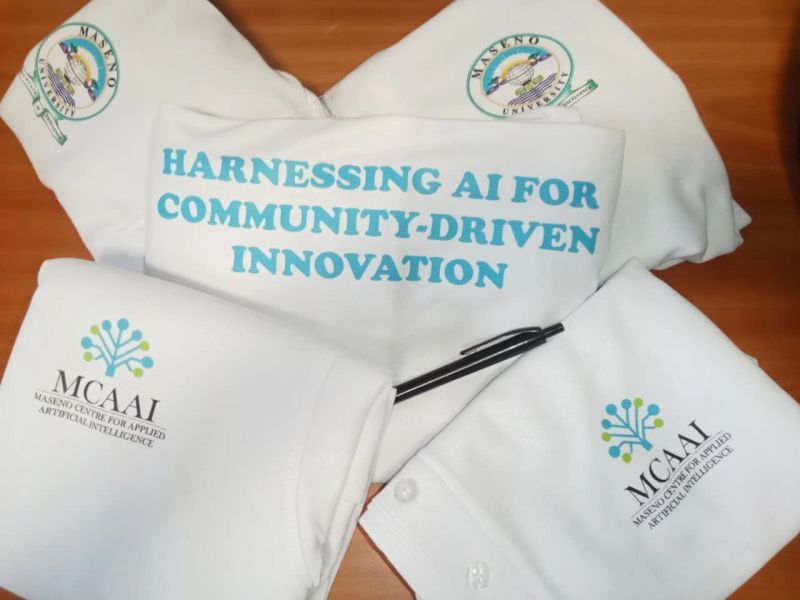
On 1 April 2026, the Maseno Centre for Applied Artificial Intelligence (MCAAI) was officially inaugurated at the Maseno University Amphitheatre in a ceremony attended by university leadership, government representatives, international research partners, and members of the communities whose languages and livelihoods sit at the centre of MCAAI's mission.
A Vision Years in the Making
MCAAI's official launch marks the culmination of a research trajectory that began several years earlier. The centre's foundational work started in 2024 with two pilot initiatives: the African Next Voices speech data collection programme, which produced the first large-scale multi-language corpus for Kenyan indigenous languages, and the Leveraging AI for Kenyan Sign Language (KSL) project, supported by Data Science Africa (DSA). These pilots demonstrated both the technical feasibility and the community demand for the kind of AI research MCAAI was designed to conduct.
In 2025, MCAAI achieved a global milestone that set the tone for the centre's approach to all subsequent work: it became the first community in the world to implement the Nwulite Obodo Open Data License (NOODL) in practice, applying the framework to a Dholuo voice data collection project and demonstrating that community-controlled data governance is not merely a theoretical aspiration but a working, deployable system. This achievement attracted international attention and established MCAAI as a global thought leader in AI data sovereignty.
The Launch Ceremony
The inauguration ceremony at the Maseno University Amphitheatre brought together an audience of over 300 participants, including Maseno University Vice-Chancellor Professor Julius Ogeng'o, representatives from the Kenya Ministry of ICT, and international partners including members of the Masakhane research community and Zone1 technology initiative. The event featured live demonstrations of the AI4KSL sign language avatar system and the AI Farm Assistant USSD platform, both of which drew significant interest from attendees.
Founder and Lead Researcher Dr. Lilian Wanzare delivered the keynote address, outlining MCAAI's four core research programmes and articulating the centre's philosophy: that AI technology developed in and for African communities must be driven by African researchers, grounded in African linguistic and cultural contexts, and governed by frameworks that ensure African communities retain ownership of the data and knowledge that power AI systems.
"We are not building AI for Africa from the outside. We are building it from within — from Maseno, from Western Kenya, from the communities whose languages, knowledge, and daily realities define what useful AI actually means in this context."
— Dr. Lilian Wanzare, Founder and Lead Researcher, MCAAI
Institutional Significance
The launch of MCAAI has positioned Maseno University as a premier destination for AI research in East Africa. The centre has already been named as the host institution for the next IndabaX Kenya machine learning conference — a significant recognition of Maseno's emerging leadership in the regional AI research landscape. MCAAI's establishment also strengthens the university's postgraduate research offering, providing Master's and PhD students in Computer Science with access to world-class research infrastructure, international partnerships, and funding opportunities that were previously unavailable at Maseno.
Looking Ahead
In the months following the launch, MCAAI will focus on three immediate priorities: expanding the African Next Voices dataset to reach 5,000 hours of speech data across seven Kenyan languages; completing the first production release of the AI4KSL sign language avatar system for use in Kenyan schools for the deaf; and publishing the NOODL framework as an open standard available for adoption by research institutions across Africa.
Applications for MCAAI's inaugural postgraduate research fellowships — covering tuition, stipend, and equipment for Master's and PhD students working on MCAAI's research programmes — are now open. Details are available on the team page.